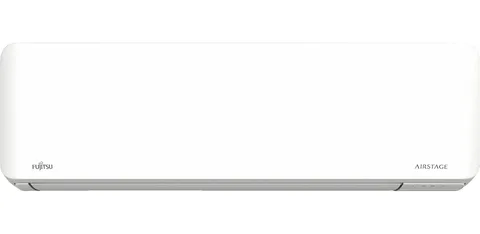
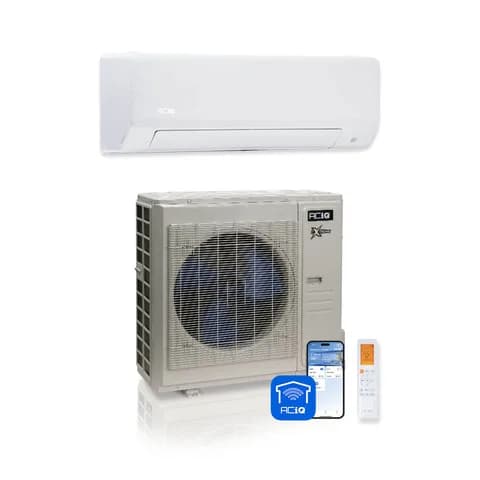
A mini split is the ideal way to heat and cool a bedroom, and it isn't close. A ducted central system treats the whole house as one thermostat zone, so your bedroom is always a compromise with the living room. A window unit is loud, blocks the glass, and cycles the compressor on and off all night. A single-zone mini split gives one room its own quiet, inverter-driven climate — set it once and it holds temperature within a degree while you sleep. Get three things right and it will be the best upgrade in the house: size it correctly, choose a genuinely quiet head, and place that head so it never blows on the bed. Everything else is a detail.
Sizing: smaller is almost always better
Here is the counterintuitive truth that trips up nearly every first-time buyer: for a bedroom, you want the smallest head that can do the job, not the biggest. A typical US bedroom runs 120 to 250 square feet, and that room needs roughly a 6,000 to 9,000 BTU indoor head. The smallest mini splits on the market are 6,000 and 9,000 BTU units, so a bedroom is right at the floor of what's available — which is exactly why people talk themselves into "just going bigger to be safe."
Going bigger is the single most common bedroom mistake, and it backfires. An oversized head cools the room to setpoint in a few minutes, satisfies the thermostat, and shuts the compressor down. Then it does nothing while the humidity creeps back up, the room warms, and it blasts on again. That on-off pattern is called short-cycling, and it's the enemy of good sleep. A right-sized unit instead runs long, gentle, low-speed cycles — which is where a mini split's inverter compressor actually shines, throttling down to a whisper instead of hammering full-blast. Long runtimes are also what pull moisture out of the air. An oversized unit never runs long enough to dehumidify, so you end up with a room that's cold and clammy at the same time: technically at temperature, but genuinely uncomfortable. In a bedroom, where you notice every degree and every bead of sweat, that clamminess is a dealbreaker.
Use about 20 BTU per square foot as your rough starting point, then adjust. A 180 sq ft bedroom lands near 3,600 BTU on paper, which rounds to the smallest 9,000 BTU unit — and that's fine, because the inverter will simply idle down. Nudge your estimate up for a room with lots of west-facing glass and afternoon sun, poor or older insulation, high or vaulted ceilings, or a bonus room over an unconditioned garage. Nudge it down for a shaded, well-insulated, standard-ceiling room in a mild climate. The goal is to match the load, not to overshoot it. If you want to move past the rough rule of thumb, our mini-split sizing guide walks through a proper Manual-J-style load calculation, and the mini-split size chart gives you a quick BTU-by-room-size lookup to sanity-check your number.
Noise: the low-fan spec is the one that matters
Every mini split will look quiet on paper, because manufacturers love to publish the lowest number they can. For a bedroom, the only figure worth reading is the indoor head's sound level at its lowest fan speed — that's the setting you'll actually sleep with. The good news is that mini-split heads are inherently quiet: the loud part, the compressor, lives outside. On low, quality wall-mounted heads commonly land somewhere in the roughly 19 to 30 dB range, which spans from "barely audible" to "soft library hum." For reference, a whispered conversation is around 30 dB, so even the upper end is well below anything that keeps you awake.
Don't just trust the brochure, though — the spread between a genuinely quiet head and a merely average one is real, and it's the difference between forgetting the unit is on and lying there listening to airflow. Pick a model with a strong low-speed spec and make sure it has a true sleep mode (sometimes called "quiet" or "night" mode), which pins the fan to its softest speed and gently drifts the setpoint over the night so the compressor barely modulates. Our roundup of the quietest mini-splits ranks specific heads by their measured low-fan output so you're not guessing.
The other half of the noise question is the outdoor unit — the condenser with the compressor and fan. It's not loud, but it isn't silent either, and a bedroom is the one room where a low background hum matters. When you plan the install, keep the outdoor unit off the exterior wall directly under or beside your bedroom window, and away from a neighbor's bedroom window too. A few feet of offset, or putting it on a different wall entirely, is usually all it takes.
Placement: high on the wall, never over the bed
A wall-mounted head belongs high — typically six to seven feet up, with a few inches of clearance above it for return airflow. Mounted high, it throws conditioned air out and across the ceiling, letting it mix and fall gently, so the whole room settles to an even temperature. Mounted too low, or aimed wrong, it turns into a fan pointed at you.
The specific rule for a bedroom: do not put the head on the wall above the headboard, and don't let it blow directly onto the bed. A steady draft of moving air across your face all night feels chilly even at a comfortable temperature, dries you out, and wakes light sleepers. The best spot is usually on a side wall or the wall at the foot of the bed, where the airflow sweeps over the sleeping area rather than straight down onto it. Louvers and "auto swing" help, but they don't fully rescue a bad location — get the mounting wall right first. Watch the outdoor side too: the line set needs a sensible path to the condenser, and the head shouldn't sit right over a dresser or closet that blocks its throw. Our guide on where to put a mini split covers head height, wall choice, and line-set routing in detail.
Features that actually help you sleep
Two comfort features earn their keep in a bedroom. The first is that sleep mode mentioned above — use it every night. The second is remote temperature sensing, branded "Follow Me," "i-Feel," or "i-see" depending on the maker: the head reads the temperature at the handheld remote instead of up at the ceiling where the unit lives. Since heat rises, the air near the ceiling is warmer than the air at pillow height, so ceiling-based sensing tends to under-cool the part of the room you're actually in. Sensing at the remote on your nightstand fixes that, holding the temperature where you sleep rather than where the unit hangs. Both features, plus quiet/eco and swing settings, are explained in our mini-split modes guide.
One last decision: single-zone versus multi-zone. For one bedroom, a single-zone system — one outdoor unit, one head — is almost always the right call. It's cheaper, more efficient at part load, and gives that room fully independent control. Only reach for a multi-zone system if you're conditioning several bedrooms (or bedrooms plus a hallway or office) off one outdoor unit, where running a single condenser makes sense. Even then, size each head to its own room using the same "don't oversize" logic above.
Get sizing, noise, and placement right and a bedroom mini split disappears into the background — quiet, steady, and perfectly comfortable. When you're ready to choose an actual unit, see our picks for the best mini splits for a bedroom, where we call out the specific quiet, right-sized heads worth buying.