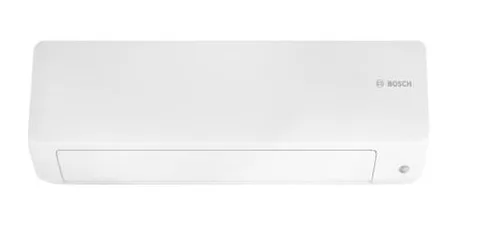
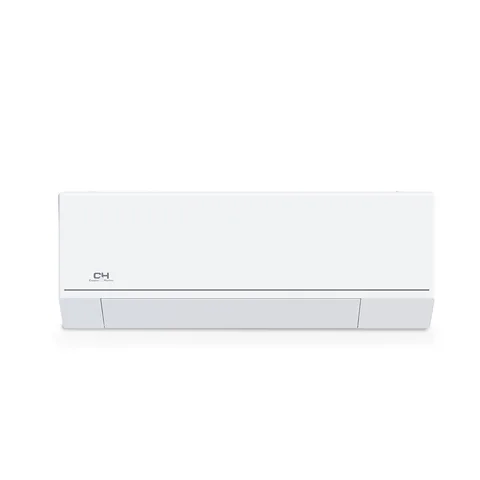
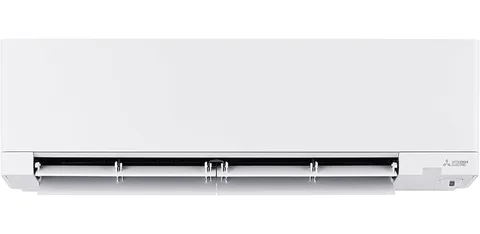
A mini split is the right call for a home office because it conditions exactly the room you sit in all day and nothing else. You stop running central air for the whole house just to keep one spare bedroom, garage bay, or backyard shed comfortable while you work. A single small head — usually 9,000 BTU or less — heats and cools the office on its own schedule, stays whisper-quiet during calls, and runs on far less energy than firing up the central system every time you get chilly at 9 a.m. If you work from home more than a couple of days a week, this is one of the clearest wins in the entire mini-split catalog.
Why a home office is such a good fit
The core problem with a home office is that it almost never lines up with how the rest of the house is used. You want the office at 70 degrees from 8 to 5 on weekdays; the rest of the family wants the living room comfortable in the evenings. Running central HVAC to satisfy the office means heating or cooling every room in the house all day, then fighting the thermostat with everyone else. A ductless head decouples the office from that fight entirely. It conditions one room, on its own setpoint, only when you're in it.
That targeted approach is where the savings come from. Instead of a central system cycling for 2,000-plus square feet, you're moving heat in and out of a single 150-square-foot room with an inverter compressor that ramps down to a trickle once it hits your setpoint. You're also skipping the duct losses that quietly waste a chunk of central-system output before it ever reaches a far bedroom. For the exact mechanics of how that translates to your power bill, see our electricity usage guide — but the short version is that conditioning one occupied room beats conditioning the whole house to serve one room, every time.
Quiet is the spec that matters most
For most rooms, noise is an afterthought. For an office it's the deciding factor. You're on video calls, you're trying to concentrate, and the indoor head is a few feet from your head for eight hours a day. Here's the good news: mini-split indoor units are genuinely quiet on their low fan speed — often in the range of a soft whisper — because the loud part, the compressor, lives outside. The catch is that "quiet" varies by model, and manufacturers publish sound ratings at multiple fan speeds. Look at the low-speed decibel figure specifically, since that's where a properly sized office unit spends most of its time.
Sizing and quiet are linked here. An oversized head blasts on high to satisfy the room fast, then shuts off — so you hear it loud, then silent, then loud again, which is exactly the cycle that wrecks a call. A right-sized head loafs along on low and stays there. If low-noise operation is your priority, start with our roundup of the quietest mini splits and cross-reference the low-fan-speed numbers before you commit.
Sizing: resist the urge to go big
A typical home office — a converted spare bedroom or a bonus room in the 100 to 200 square foot range — needs a small head, frequently 9,000 BTU or even less. The instinct to buy "a little extra capacity to be safe" is the single most common mistake, and it backfires in a room you occupy all day. An oversized unit satisfies the temperature so fast it short-cycles: it never runs long enough to pull humidity out of the air, so the room ends up cool but clammy. In a bedroom you might not notice. Sitting at a desk for eight hours, you will.
Two things nudge a home office slightly warmer than its square footage suggests, and both deserve a look during sizing. First, equipment heat — a desktop, a couple of monitors, a laptop dock, and task lighting throw off real wattage in a small enclosed room. Second, sun exposure through a west- or south-facing window can add meaningful afternoon load. Neither is a reason to jump a size; they're reasons to size the room honestly rather than by floor area alone. Our mini-split sizing guide walks through how to factor in equipment load and solar gain so you land on the right BTU instead of the biggest one.
Placement: don't blow air on yourself all day
Where you mount the head matters more in an office than almost anywhere else, because you're stationary. A wall unit that dumps its airflow directly onto your desk, your neck, or your screen turns into a constant draft you'll be fighting — reaching for a sweater at 2 p.m. even though the room is technically at temperature. Mount it so the air sweeps across the room and mixes, not straight at the chair. High on a wall behind or to the side of your desk usually works; above the desk blowing down onto you rarely does. If you're planning the install, our guide on where to put a mini split covers head placement, clearances, and the outdoor-unit side of the decision.
Shed and garage offices: insulate first
Converted garages, detached sheds, and bonus rooms over the garage are booming as offices, and a mini split is often the only practical way to condition them — there's usually no duct out there to extend. One rule comes before everything else: insulate first. An uninsulated shed or a garage with a bare roll-up door will overwhelm any small unit, and you'll blame the equipment for a building-envelope problem. Seal and insulate the walls, ceiling, and door, then size the head for the improved space.
The nice payoff for small detached offices is electrical simplicity. Many small single-zone systems in the 9,000 to 12,000 BTU class are available in 115V versions that run on a standard household circuit — no 240V run, no subpanel, in a lot of cases. That can be the difference between a straightforward install and an electrician's estimate that dwarfs the equipment cost. Confirm the voltage and the required breaker for the specific model, but a small 115V unit on an existing circuit is a very common shed-office setup.
Smart control makes it effortless
The last piece is scheduling, and it's what turns a home-office mini split from "a thing you remember to turn on" into "a room that's ready when you sit down." WiFi control lets you pre-condition the office before your first call so you're not working through the first cold hour while it catches up, then drop it to an idle setpoint the moment you clock out — no phantom conditioning of an empty room all evening. Some units have it built in; others take an add-on module. Either way, a simple weekday schedule captures most of the energy savings automatically. See our WiFi and smart control guide for what's built in versus what needs an adapter.
The bottom line
A home office is close to the ideal mini-split use case: one room, occupied on a predictable schedule, that you want quiet, comfortable, and independent from the rest of the house. Size it honestly, prioritize low-speed noise, aim the airflow away from your chair, insulate anything detached, and let a schedule do the rest. When you're ready to pick a specific unit, our best mini splits for a home office roundup narrows it to the models that get the quiet-and-right-sized combination right.