The answer
These are the same 18k DIY system in every way that usually decides a purchase - both 230V, both R-454B, both installed the same self-install Quick Connect way, both similarly priced - so the choice comes down to one question: how cold does your winter actually get? Choose the standard DIY 18k for milder winters and lower cost: it certifies higher efficiency (SEER2 22.5 vs 21.2, HSPF2 11.5 vs 11) and has cost less when we checked, and it operates down to -13F. Choose the DIY Hyper Heat 18k if you need documented heat in real cold: it operates to -22F and publishes its low-temperature heating output, where the standard model publishes an operating floor but no cold-weather capacity numbers at all.
Side by side
Systems compared
- MRCOOL DIY Hyper Heat 5th Gen 18,000 BTU (230V)
- Current retail price: $3,173 at HVACDirect
| Specification | 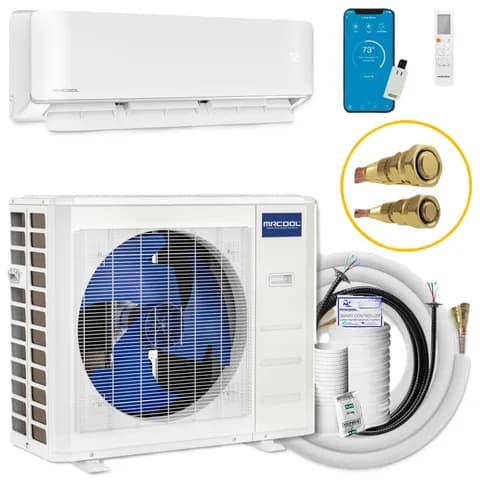 | 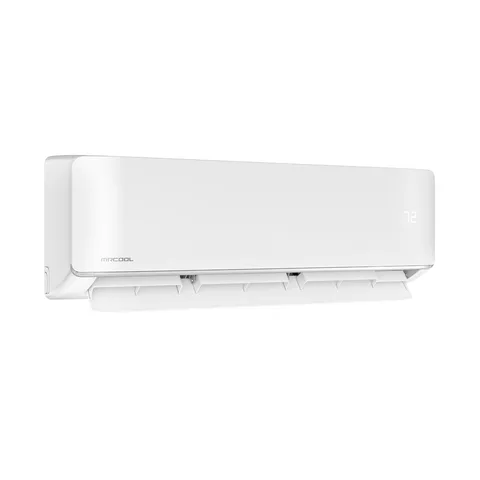 |
|---|---|---|
| SplitAtlas score | 8.9 / 10best published | 8.6 / 10 |
| Price band | not published | $3,173 |
| Rated cooling capacity | 18,000BTU/h | 18,000BTU/h |
| Rated heating capacity | 18,000BTU/h | 18,000BTU/h |
| SEER2 | 22.5SEER2best published | 21.2SEER2 |
| HSPF2 | 11.5HSPF2best published | 11HSPF2 |
| Certified heating at 5F | not published | 18,000BTU/h |
| Minimum heating ambient | -13F | -22Fbest published |
| Voltage options | 208/230V | 208/230V |
| Install path | DIY install | DIY install |
| Warranty terms | Base: 5 yr parts / 7 yr compressor (standard coverage). Score uses Base. | Base: 5 yr parts / 7 yr compressor (standard coverage). Score uses Base. |
| Noise range | Indoor 54.5/44.5/40.5/30.5/19.0 dB(A) / Outdoor 58.5 dBA | Indoor 54.5 / 45 / 40 / 30.5 / 20.5 dB(A) / Outdoor 58 dBAbest published |
| Refrigerant generation | R-454B - current-generation refrigerant | R-454B - current-generation refrigerant |
Some retailer links may earn us a commission at no extra cost; paid relationships never change scores or recommendations. Affiliate disclosure
Paid link
MRCOOL DIY 5th Gen 18,000 BTU (230V)
Reference-only price
Last seen at HVACDirect on Jul 27, 2026: $2,909
MRCOOL DIY Hyper Heat 5th Gen 18,000 BTU (230V)
$3,173 / Fresh price - checked Jul 27, 2026
Data freshness: selected systems last sourced Aug 17, 2026 or newer.
Run your own climate and rates through the operating-cost calculator, and price the install either way with the installation cost estimator.
Who each is for
The standard DIY 18k buyer lives where the coldest design nights stay at or above roughly -13F. They want the better certified efficiency and the lower price, and they are comfortable that "rated to -13F" is enough headroom for their climate. For a three-season garage, a mild-winter region, or a space where cooling is the main job, paying for deep-cold capability they will never use makes no sense - and the standard model is actually the more efficient unit.
The DIY Hyper Heat 18k buyer is shopping because of winter. They see temperatures below -13F, or they simply refuse to guess: the Hyper Heat publishes what it delivers when it is cold - rated heating output down into single digits and operation to -22F - while the standard 18k lists only an operating floor. That documented cold-weather performance, plus the extra operating range, is what the price premium buys. It is the self-install alternative to booking a contractor for a pro-tier Hyper-Heating system.
What they share
Because both are MRCOOL 5th Gen DIY units, the install story is identical: a pre-charged Quick Connect line set with no vacuum pump or gauges for a standard wall install, and the same 5-year parts / 7-year compressor warranty that does not disclaim self-installation. EPA's Section 608 guidance says connecting pre-charged lines still requires technician certification. Both need a 230V dedicated circuit (18-19 A minimum circuit ampacity), so neither has the 115V retrofit convenience of the smaller standard DIY units. The decision genuinely is just cold-weather capability versus efficiency and price - not install method, not refrigerant, not warranty.
The honest caveat
The standard DIY 18k does not publish rated heating output at 5F or 17F - only its -13F operating floor. That is not the same as saying it performs poorly in the cold; it means the manufacturer does not document it, so a cold-climate buyer cannot verify it. The Hyper Heat does document those numbers. If winter heat is the reason you are buying, buy the unit whose cold-weather output you can actually see.
Keep comparing
Considering a smaller size? See the standard DIY line on the model pages. Weighing DIY against hiring out entirely? The DIY vs professional installation guide walks that call, and the product finder filters every published system by capacity, voltage, and cold-climate rating.
Sources
- HVACDirect: HVACDirect product page DIY-18-HP-WM-230D25-O - MRCOOL DIY 5th Gen 18,000 BTU (230V), retrieved Jul 18, 2026.
- HVACDirect: HVACDirect product page DIY-18-HP-WM-230D25-O - MRCOOL DIY 5th Gen 18,000 BTU (230V), retrieved Jul 27, 2026.
- MRCOOL: MRCOOL DIY Series Single-Zone Mini-Split System Installation & Owner's Manual - MRCOOL DIY 5th Gen 18,000 BTU (230V), retrieved Aug 17, 2026.
- MRCOOL: MRCOOL R454B DIY-5 submittal - MRCOOL DIY 5th Gen 18,000 BTU (230V), retrieved Jul 18, 2026.
- AHRI: AHRI public directory details for MRCOOL DIY Hyper Heat wall-mount pairings - MRCOOL DIY Hyper Heat 5th Gen 18,000 BTU (230V), retrieved Jul 20, 2026.
- HVACDirect: HVACDirect product page DIYHH-18-HP-WM-230D25-O - MRCOOL DIY Hyper Heat 5th Gen 18,000 BTU (230V), retrieved Jul 27, 2026.
- MRCOOL: MRCOOL 5th Generation DIY Series Limited Warranty - MRCOOL DIY Hyper Heat 5th Gen 18,000 BTU (230V), retrieved Jul 20, 2026.
- MRCOOL: MRCOOL 5th Generation DIY Series Limited Warranty - MRCOOL DIY Hyper Heat 5th Gen 18,000 BTU (230V), retrieved Jul 20, 2026.
- MRCOOL: MRCOOL DIY Hyper Heat 5th Gen brochure/specifications - MRCOOL DIY Hyper Heat 5th Gen 18,000 BTU (230V), retrieved Jul 20, 2026.
- MRCOOL: MRCOOL DIY Hyper Heat Series Single Zone Installation and Owner's Manual - MRCOOL DIY Hyper Heat 5th Gen 18,000 BTU (230V), retrieved Jul 20, 2026.
- MRCOOL: MRCOOL DIY Hyper Heat Series Single Zone Installation and Owner's Manual - MRCOOL DIY Hyper Heat 5th Gen 18,000 BTU (230V), retrieved Aug 17, 2026.
- MRCOOL-hosted Dasen HVAC storefront: DIY 5th Gen - R454B - 18K Hyper Heat BTU 230V Condenser w/ 25ft Install Kit - MRCOOL DIY Hyper Heat 5th Gen 18,000 BTU (230V), retrieved Jul 20, 2026.
Whichever system you pick, compare the installed total and any electrical work before you choose.
Get installation quotesFrequently asked questions
- What electrical difference should I check first in this comparison?
- Start with the published voltage requirements: MRCOOL DIY 5th Gen 18,000 BTU (230V): 208/230V; MRCOOL DIY Hyper Heat 5th Gen 18,000 BTU (230V): 208/230V. A 115V label can make a retrofit easier, while a 230V system still needs the right dedicated circuit and local code review.