The answer
Two cold-climate heat pumps, two very different buyers. The MRCOOL DIY Hyper-Heat is the rare deep-cold unit you can install yourself - precharged quick-connect, published operation to around -22F, and strong value. The Mitsubishi Hyper-Heat is the premium benchmark for documented capacity in deep cold, professionally installed. Choose the MRCOOL if you'll do the work and want cold-climate heat on a budget; choose the Mitsubishi if you want the documented deep-cold benchmark with premium support and you're hiring a pro.
Side by side
Systems compared
| Specification | 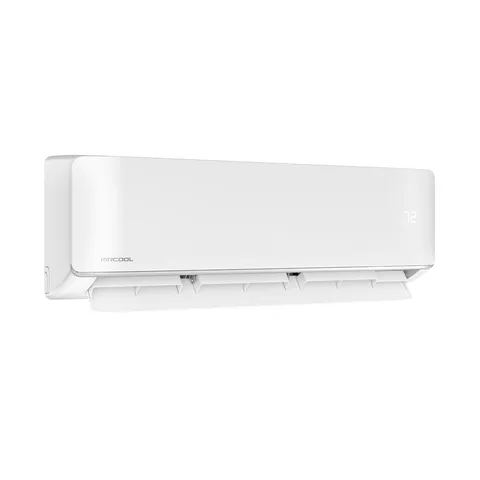 | 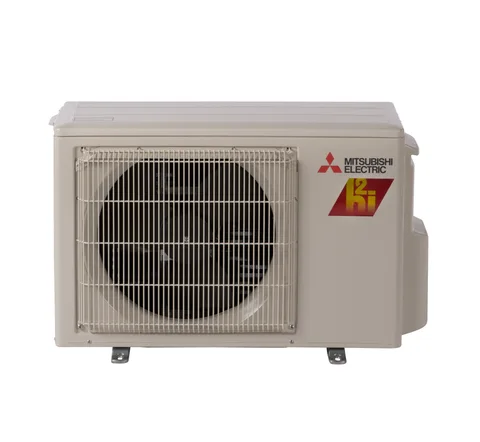 |
|---|---|---|
| SplitAtlas score | 8.4 / 10 | 8.5 / 10best published |
| Price band | $2,532 | not published |
| Rated cooling capacity | 12,000BTU/h | 12,000BTU/h |
| Rated heating capacity | 12,000BTU/h | 12,300BTU/h |
| SEER2 | 23.5SEER2best published | 21.7SEER2 |
| HSPF2 | 10HSPF2best published | 9.6HSPF2 |
| Certified heating at 5F | 11,000BTU/h | not published |
| Minimum heating ambient | -22Fbest published | -13F |
| Voltage options | 208/230V | 208/230V |
| Install path | DIY install | Professional install |
| Warranty terms | Base: 5 yr parts / 7 yr compressor (standard coverage). Score uses Base. | Base: 5 yr parts / 7 yr compressor (licensed HVAC contractor installation); Registered: 10 yr parts / 10 yr compressor (owner-occupied residence registered within 90 days of installation); Program: 12 yr parts / 12 yr compressor (owner-occupied residence installed and registered by a Diamond Contractor within 90 days). Score uses Registered. Additional published terms are shown for reference and not counted in the score. |
| Noise range | Indoor 45.5 / 40 / 34 / 22.5 / 18 dB(A) / Outdoor 56.5 dBA | Indoor cooling 19-22-30-37-45; heating 19-22-30-37-43 / Outdoor 51 dBAbest published |
| Refrigerant generation | R-454B - current-generation refrigerant | R-410A - legacy outgoing refrigerant |
Some retailer links may earn us a commission at no extra cost; paid relationships never change scores or recommendations. Affiliate disclosure
Paid link
MRCOOL DIY Hyper Heat 5th Gen 12,000 BTU (230V)
$2,532 / Checked Jul 27, 2026
Mitsubishi Electric M-Series GS Hyper-Heating 12k 230V (MSZ-GS12NA / MUZ-GS12NAHZ)
no current retail listing
Data freshness: selected systems last sourced Jul 20, 2026 or newer.
Read the low-temperature rows carefully, and note they're published differently: an operating floor (how cold it still runs) isn't the same as a rated-capacity point (how cold it delivers rated heat). Match the exact rating to your winter design temperature - the cold-weather guide explains how.
Who each is for
The MRCOOL DIY Hyper-Heat buyer wants real winter heat and wants to install it themselves. Publishing operation to around -22F on a self-installable, precharged unit is a genuinely rare combination, and it costs far less all-in once you skip the installer bill. For a cold-climate DIY project, it's the pick - see best DIY mini splits.
The Mitsubishi Hyper-Heat buyer wants the documented deep-cold benchmark and premium support, and is hiring a professional (a warranty condition). Mitsubishi is engineered to hold rated capacity in deep cold with the best documentation in the category. Note the honest tradeoff: Hyper-Heat is tuned for the extremes and can post lower everyday efficiency than the standard line - buy it for the cold, not the badge (standard vs Hyper-Heat).
The bottom line
If you're installing it yourself and want cold-climate heat for far less, the MRCOOL DIY Hyper-Heat is remarkable value. If you want the documented deep-cold benchmark with premium reliability and support - and a pro is installing it - the Mitsubishi earns its premium. Match the published low-temperature rating to your actual design temperature either way, and keep backup heat below it.
Keep comparing
Weighing premium vs DIY more broadly? See Mitsubishi vs MRCOOL DIY. Filter every published system by low-temperature performance and install path in the product finder.
Sources
- AHRI: AHRI public directory details for MRCOOL DIY Hyper Heat wall-mount pairings - MRCOOL DIY Hyper Heat 5th Gen 12,000 BTU (230V), retrieved Jul 20, 2026.
- HVACDirect: HVACDirect product page DIYHH-12-HP-WM-230D25-O - MRCOOL DIY Hyper Heat 5th Gen 12,000 BTU (230V), retrieved Jul 27, 2026.
- MRCOOL: MRCOOL 5th Generation DIY Series Limited Warranty - MRCOOL DIY Hyper Heat 5th Gen 12,000 BTU (230V), retrieved Jul 20, 2026.
- MRCOOL: MRCOOL 5th Generation DIY Series Limited Warranty - MRCOOL DIY Hyper Heat 5th Gen 12,000 BTU (230V), retrieved Jul 20, 2026.
- MRCOOL: MRCOOL DIY Hyper Heat 5th Gen brochure/specifications - MRCOOL DIY Hyper Heat 5th Gen 12,000 BTU (230V), retrieved Jul 20, 2026.
- MRCOOL: MRCOOL DIY Hyper Heat Series Single Zone Installation and Owner's Manual - MRCOOL DIY Hyper Heat 5th Gen 12,000 BTU (230V), retrieved Jul 20, 2026.
- MRCOOL: MRCOOL DIY Hyper Heat Series Single Zone Installation and Owner's Manual - MRCOOL DIY Hyper Heat 5th Gen 12,000 BTU (230V), retrieved Aug 17, 2026.
- MRCOOL-hosted Dasen HVAC storefront: DIY 5th Gen - R454B - 12K Hyper Heat BTU 230V Condenser w/ 25ft Install Kit - MRCOOL DIY Hyper Heat 5th Gen 12,000 BTU (230V), retrieved Jul 20, 2026.
- AHRI: AHRI Directory Air-Source Heat Pumps record ref 207679253 - Mitsubishi Electric M-Series GS Hyper-Heating 12k 230V (MSZ-GS12NA / MUZ-GS12NAHZ), retrieved Jul 20, 2026.
- Mitsubishi Electric Trane HVAC US: MSZ-GS12NA & MUZ-GS12NAHZ submittal - Mitsubishi Electric M-Series GS Hyper-Heating 12k 230V (MSZ-GS12NA / MUZ-GS12NAHZ), retrieved Jul 20, 2026.
- Mitsubishi Electric Trane HVAC US LLC: METUS Residential M-Series, P-Series and SMART MULTI Limited Warranty Statement - Mitsubishi Electric M-Series GS Hyper-Heating 12k 230V (MSZ-GS12NA / MUZ-GS12NAHZ), retrieved Jul 20, 2026.
- Mitsubishi Electric Trane HVAC US LLC: METUS Residential M-Series, P-Series and SMART MULTI Limited Warranty Statement - Mitsubishi Electric M-Series GS Hyper-Heating 12k 230V (MSZ-GS12NA / MUZ-GS12NAHZ), retrieved Jul 20, 2026.
Whichever system you pick, compare the installed total and any electrical work before you choose.
Get installation quotesFrequently asked questions
- What electrical difference should I check first in this comparison?
- Start with the published voltage requirements: MRCOOL DIY Hyper Heat 5th Gen 12,000 BTU (230V): 208/230V; Mitsubishi Electric M-Series GS Hyper-Heating 12k 230V (MSZ-GS12NA / MUZ-GS12NAHZ): 208/230V. A 115V label can make a retrofit easier, while a 230V system still needs the right dedicated circuit and local code review.