MRCOOL DIY 5th Generation 12k 115V
- Best for
- Best overall DIY
- Cooling
- 12,000 BTU/h
- SEER2
- 23.5 SEER2
- HSPF2
- 10.2 HSPF2
- Voltage
- 115 V
- Install
- DIY install
- Score
- 8.8 / 10
Guide
If you want to install a mini split yourself, buy one whose refrigerant lines click together. Only four brands we track make them: MRCOOL, Klimaire, Perfect Aire and Blueridge. For most rooms, start with the MRCOOL DIY 12,000 BTU. It runs on an ordinary 115-volt circuit, and it's the one we'd buy first. The picks below cover the other situations: a cold climate, a whole house, a small room and a big one.
Source-backed picks
These picks are ranked on fit and evidence. When an exact retail offer exists, we show it; when it does not, we route you to installation quotes instead.
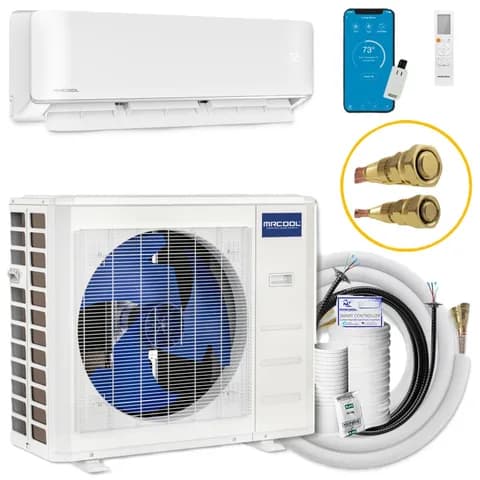
SplitAtlas score 8.8 / 10
Paid link
Check price at HVACDirectReference-only price
Last seen at HVACDirect on Jul 27, 2026: $2,359. This is not a live price.
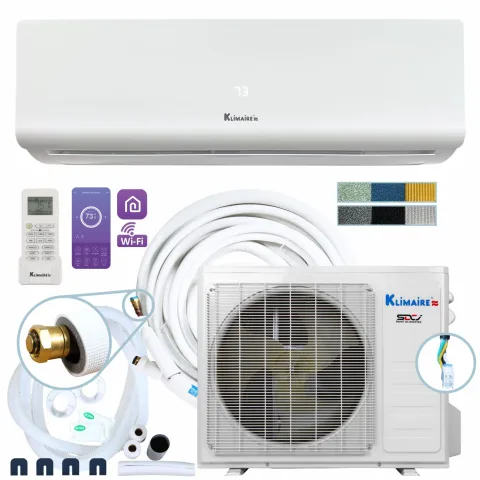
Klimaire / Klimaire KIWQ-KOIQ DIY
SplitAtlas score 8.4 / 10
No current offer in our data
We do not have a current exact retail offer for this system in our data.
Get installation quotes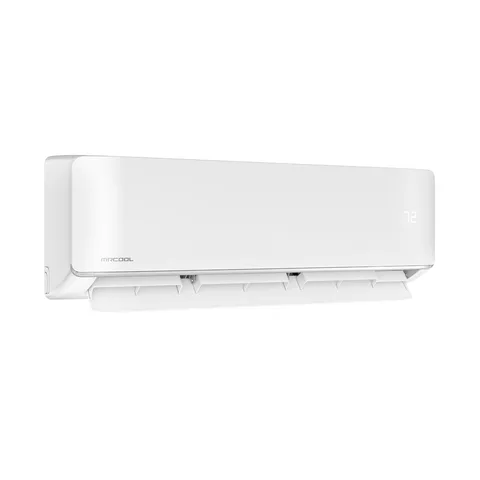
MRCOOL / DIY 5th Gen Hyper Heat
SplitAtlas score 8.4 / 10
See specs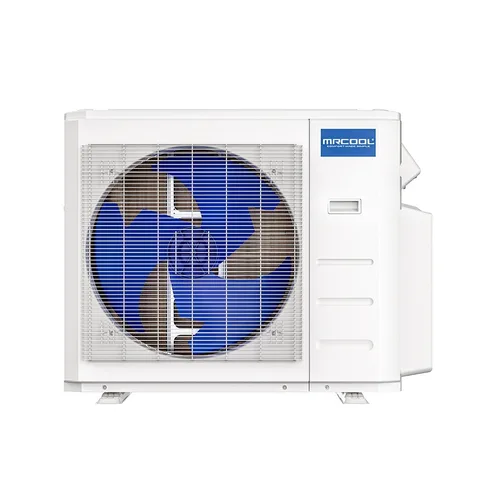
MRCOOL / DIY 5th Gen Multi-Zone
Certified per indoor-unit combination, not per outdoor unit
Paid link
Check price at HVACDirectReference-only price
Last seen at HVACDirect on Jul 20, 2026: $1,555. This is not a live price.
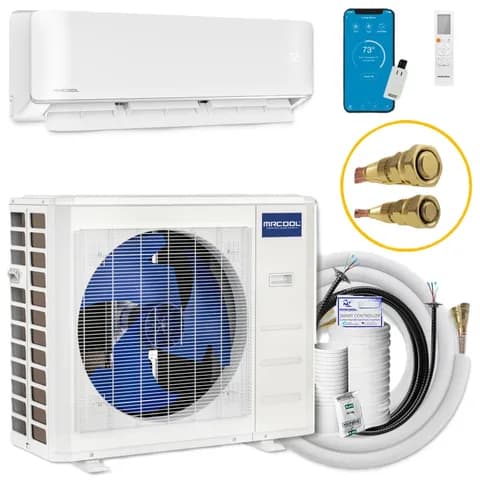
SplitAtlas score 8.6 / 10
Paid link
Check price at HVACDirectReference-only price
Last seen at HVACDirect on Jul 27, 2026: $2,329. This is not a live price.
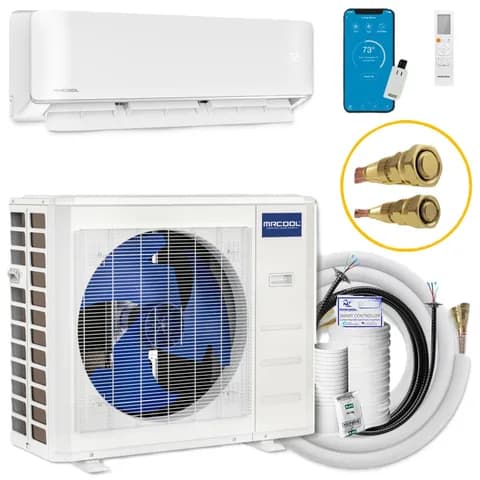
SplitAtlas score 8.3 / 10
Paid link
Check price at HVACDirectReference-only price
Last seen at HVACDirect on Jul 27, 2026: $3,329. This is not a live price.
Certified per indoor-unit combination, not per outdoor unit
Related pages
A standard mini split needs a professional to connect the refrigerant lines, pull a vacuum on them and check for leaks. That's skilled work with tools most homeowners don't own. A DIY system skips it: the refrigerant arrives sealed in lines that couple together by hand. EPA's Section 608 guidance says connecting pre-charged lines still requires technician certification, so check where you stand before you plan the job.
Watch the wording when you shop. "Pre-charged" only means the outdoor unit leaves the factory with refrigerant in it, which is true of nearly every mini split. What you want is quick-connect lines. Blueridge shows how easy the two are to confuse: its DS systems click together, while its XS systems need flared connections, and the model names differ by one letter.
And DIY doesn't mean no electrician. Nearly every system still needs its own circuit, which is licensed work in most places, so budget for it. The DIY vs professional guide walks through the whole job.
The MRCOOL DIY 5th Generation 12k 115V is where most people should start. It runs on a standard 115-volt circuit, its lines click together, and it's among the most efficient 115-volt DIY systems we list. It keeps heating down to -13F, which covers most of the country. MRCOOL writes its DIY warranty for self-installation, so doing the job yourself doesn't put your coverage at risk. For a single room, it's the one to beat.
If you want a second option to weigh against the MRCOOL, the Klimaire DIY 12k 115V is the closest match: quick-connect lines, a 115-volt circuit, and heating down to -13F. It has one thing the MRCOOL doesn't: Klimaire publishes how much heat it makes on a 5F day, about seven-tenths of its rated output, so you know what you're getting in a cold snap.
The line runs from a 115-volt Klimaire DIY 9k 115V to a Klimaire DIY 23k 230V, and the Klimaire DIY 12k 230V is a little more efficient than the 115-volt one. Skip the 36k: it's less efficient and stops heating at -4F. Register a Klimaire within 45 days: that takes the warranty from 3 years on parts to 5 years on parts and 7 on the compressor.
The MRCOOL DIY 5th Gen Hyper Heat 12k 230V is the rare system that's built for real winters and still installs yourself. It's rated to keep heating down to -22F, and on a 5F day it still makes about nine-tenths of its full heat. The 18,000 BTU version keeps all of it. Both need a 230-volt circuit. Check its cold-weather rating against your area's coldest nights in the cold-weather guide before you buy.
To heat and cool several rooms, the MRCOOL DIY 5th Gen Multi-Zone 230V systems run three to six indoor units off one outdoor unit, with the same click-together lines. Size each indoor unit to its own room rather than adding up square footage. Read single-zone vs multi-zone first: for two rooms, two right-sized single-zone systems often beat one multi-zone on efficiency, and if one fails the other keeps running. Klimaire's Klimaire DIY Series 18k 230V (KMIP-KIWP) line is the alternative, sold as two- to five-zone kits.
For a bedroom, an office or a small addition, the MRCOOL DIY 5th Generation 9k 115V is the easiest system here to wire, on a 115-volt circuit. It's also a slightly better heater than the 12k, so there's no reason to size up out of caution. Confirm the room's load in the sizing calculator first. An oversized system switches on and off constantly and leaves the air clammy.
For a big living room, a shop or an open floor plan, step up to the MRCOOL DIY 5th Generation 23k 230V. It's rated at 23,000 BTU, a little under the number on the box, and it needs a 230-volt circuit. The lines still click together. MRCOOL also makes a 36k for the biggest spaces, but it gives up a lot of efficiency to get there. Two smaller systems may serve you better.
Blueridge makes quick-connect systems too, and good ones. Its DS2 High Efficiency 9k and 12k carry the same efficiency ratings as MRCOOL's DIY systems of those sizes, and Blueridge also publishes how much heat they make at 5F. The Blueridge DS3 DIY All Climate 18k 230V keeps its full heat at 5F. Blueridge sells through Alpine Home Air, and each model page links to the listing.
Perfect Aire's Quick Connect line only heats down to -4F, so it suits milder winters. We have a buy link for its 36k; the model pages cover the other sizes.
We choose from the manufacturers' own ratings and installation manuals, and only systems whose lines genuinely click together count as DIY here. Each pick links to an exact listing you can buy from. No brand pays for placement.
What is the best DIY mini split? For most rooms, the MRCOOL DIY 12,000 BTU: it runs on 115 volts, its lines click together, and its warranty is written for self-installation. Klimaire's DIY line is the closest alternative, and MRCOOL's DIY Hyper-Heat is the pick for a cold climate.
Can you really install a mini split yourself? With a quick-connect system, the refrigerant side is designed for it: no vacuum pump, no gauges. Check the certification question covered above before you start, and plan on an electrician for the circuit.
Is a DIY mini split as good as a professionally installed one? Close. The best DIY systems rate about as well as mid-range professional ones, but the top professional systems are more efficient and heat better in deep cold. You pay a little extra for the DIY design.
Does installing it myself void the warranty? Not with MRCOOL's DIY line: its warranty is written for self-installation. Klimaire's DIY warranty runs longest if you register within 45 days. Most professional brands are the opposite and require a licensed installer.