Carrier Infinity 35 12k 230V
- Best for
- Common single-zone
- Cooling
- 12,000 BTU/h
- SEER2
- 29.5 SEER2
- HSPF2
- 12.7 HSPF2
- Voltage
- 230 V
- Install
- Professional install
- Score
- 9.4 / 10
Guide
Yes, Carrier makes genuinely good mini splits — but you're buying a brand name as much as a machine, and that cuts both ways. Carrier is one of the most trusted names in American HVAC; the company essentially invented modern air conditioning, and a century of that reputation is baked into the price. The current ductless line is legitimately competitive: it runs the newer R-454B refrigerant across a clear good/better/best structure, and the premium Infinity tier is a strong cold-climate performer. Where Carrier gets complicated is how you buy it and what you're paying the brand premium for. This review walks through both.
Source-backed picks
These picks are selected from our published model database. Exact retail offers are shown when we have them.
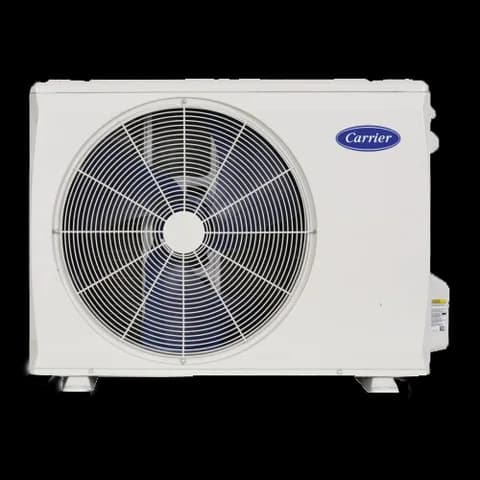
SplitAtlas score 9.4 / 10
Paid link
Check price at HVACDirectReference-only price
Last seen at HVACDirect on Jul 27, 2026: $3,900. This is not a live price.
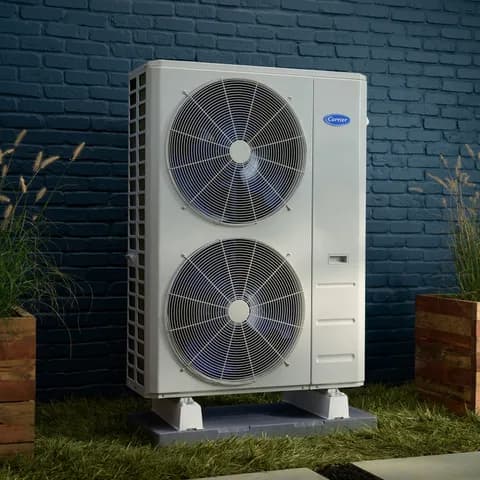
SplitAtlas score 9.3 / 10
Paid link
Check price at HVACDirectReference-only price
Last seen at HVACDirect on Jul 28, 2026: $5,000. This is not a live price.
Related pages
Carrier organizes its ductless range the way it organizes almost everything — a tiered good/better/best structure. At the entry point is the Comfort 22 series, the value/standard tier. It's a competent, no-drama single-zone heat pump for a bedroom, office, or garage where you want reliable conditioning without paying for the top of the catalog. It is, by design, more basic than what sits above it.
Above that is the Infinity family — the 25, 27, and 35 series — which is where Carrier puts its real engineering. These are the premium, higher-efficiency, cold-climate-designated units, and they're the reason a Carrier mini split earns a place on a serious shortlist. If you're in a heating-dominated climate, the Infinity tier is the part of the line worth your attention; the Comfort 22 is the part worth your budget.
Both tiers offer multi-zone configurations (roughly 2 to 5 zones off a single outdoor unit), so Carrier can cover a single room or a whole floor. If you're weighing a one-outdoor-unit, several-indoor-head setup, our multi-zone mini split guide explains the tradeoffs before you commit to a head count you can't easily change later.
One quiet but meaningful point in Carrier's favor: the current ductless line uses R-454B, the lower-GWP refrigerant the industry is transitioning to. That matters for buyers who don't want to purchase equipment built around a refrigerant that's already on the way out. It's not a reason to buy Carrier by itself — several brands have made the same move — but it means a Carrier system you buy today is aligned with where the industry is heading, not behind it.
The strongest case for Carrier is the Infinity line's cold-weather heating. These units are cold-climate designated, and in a Northern-tier home that's the spec that actually determines whether a mini split carries your winter or hands off to a backup furnace. If cold-climate heating is your priority, don't stop at the brand — see how Carrier's Infinity tier stacks up against the field in our best cold-climate mini splits guide, and cross-check it against the broader field in our best mini split brands roundup. Carrier competes well on this axis; it isn't automatically the winner, and the comparison is worth doing.
Here's the honest wrinkle. Carrier straddles two buying paths. Some of the ductless range — notably parts of the Infinity line — is available to purchase online through stocking retailers like HVACDirect, which puts a real price in front of you. But much of the range runs through Carrier's professional dealer network, where you get a contractor quote rather than a listed price. So depending on the exact model you want, you're either shopping a buyable unit or booking a dealer visit — and that's genuinely different from brands that commit fully to one model or the other.
Either way, this is professional-install equipment. A mini split needs a proper line-set connection, vacuum, and charge check, and Carrier's warranty coverage assumes a qualified installer. If you're trying to decide whether to source the unit and hire out labor or hand the whole job to a dealer, our DIY vs professional installation guide lays out where the line really is. And before you buy anything, size it correctly — an oversized Carrier short-cycles and underperforms just like any other brand, so start with our mini split sizing guide.
Carrier's weaknesses are the flip side of its strengths. You pay for the brand name — a Carrier badge commands a premium, and some of that is reputation rather than measurable performance over a well-regarded competitor. The full range is dealer-oriented, so pricing transparency depends on which model you're after. And the Comfort 22 tier, while solid, is noticeably more basic than the Infinity units that get the headlines; don't assume every Carrier mini split is a cold-climate powerhouse, because only the top of the line is.
Carrier is a trusted, well-supported brand with a genuinely strong cold-climate Infinity tier, current R-454B refrigerant, and a deep dealer and service network — and the tradeoffs are a brand premium and a range that's split between buyable and dealer-quote paths. If that profile fits how you want to buy, it's an easy shortlist. See the full breakdown, tiers, and where to buy on our Carrier brand hub.