Klimaire DIY 12k 115V
- Best for
- Common single-zone
- Cooling
- 12,000 BTU/h
- SEER2
- 23 SEER2
- HSPF2
- 10 HSPF2
- Voltage
- 115 V
- Install
- DIY install
- Score
- 8.4 / 10
Guide
Klimaire is a legitimate value brand — decent equipment for the money, sold almost entirely online, and easy to get your hands on — but it is not a cold-climate specialist no matter what the product names suggest. If you want a straight answer: Klimaire is worth buying if your priority is a low price on a DIY-friendly or contractor-installed single zone in a mild-to-moderate climate. It is not the brand to reach for if you are heating a poorly insulated house through a hard northern winter and need certified low-temperature performance. Treat it as a budget tool that does budget things well, and you will be happy. Expect a certified cold-climate specialist, and you will be disappointed.
Source-backed picks
These picks are selected from our published model database. Exact retail offers are shown when we have them.
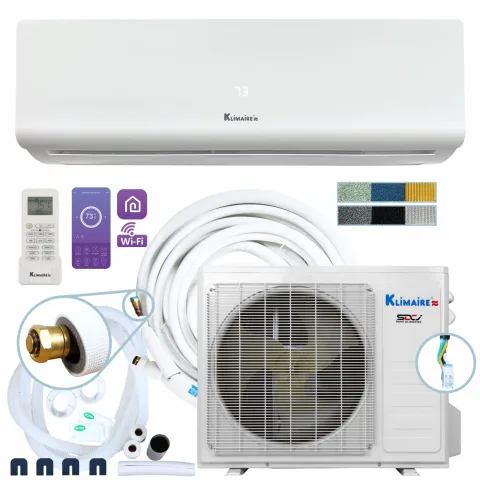
Klimaire / Klimaire KIWQ-KOIQ DIY
SplitAtlas score 8.4 / 10
No current offer in our data
We do not have a current exact retail offer for this system in our data.
Get installation quotes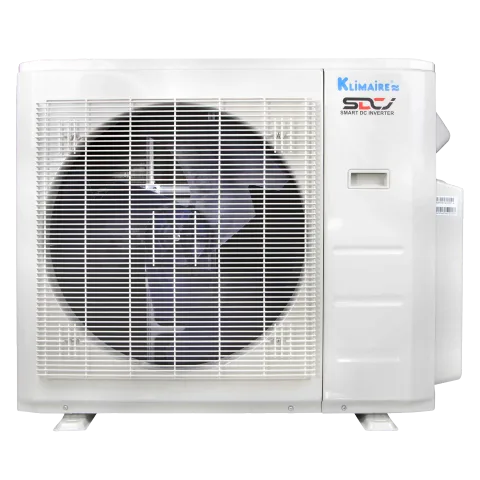
Klimaire / KMHR Hyper Heat Series
SplitAtlas score 8.8 / 10
No current offer in our data
We do not have a current exact retail offer for this system in our data.
Get installation quotesRelated pages
Klimaire sells through online channels rather than a traditional dealer network — you will find it on Amazon, HeatAndCool, Walmart, and similar outlets rather than in a local distributor's showroom. That is the whole business model, and it is why the pricing is aggressive. You are cutting out the layers of markup that come with a name-brand system installed by a factory-authorized dealer. The tradeoff is that when something goes wrong, you are not calling a local rep who stocks parts for that exact model down the street. Support and warranty service run thinner than what the majors offer, and that is the single most important thing to understand before you buy. If your comfort with a mini split depends on having a service tech on speed dial, Klimaire is the wrong fit. If you are the kind of buyer who is comfortable troubleshooting, sourcing a part online, or working with an independent installer, the savings are real. This online-first, value-first positioning is why we group it the way we do on our best budget mini splits list rather than alongside the premium names.
Klimaire's catalog splits into a few clear lines, and knowing which is which saves you from overpaying or under-buying. The KMHR Hyper Heat series is the top of the range and its strongest option for cold-weather heating. The KMIP/KIWP line is the DIY-oriented series — pre-charged with refrigerant and designed to go in without a vacuum pump or a set of gauges, which is exactly what you want if you are installing it yourself. The KMIR line is the standard series, the plain-vanilla single zone for a room or a small space. Across these you will find a mix of R-32 and R-454B refrigerant, and multi-zone configurations from two up to five zones. For most buyers the decision is simple: pick KMIP/KIWP if you are doing the work yourself, KMHR if heating performance matters most, and KMIR for a basic cooling-forward single zone. If you are the DIY type, the pre-charged line is the reason Klimaire keeps showing up on our best DIY mini splits shortlist.
Here is the part other reviews gloss over. The KMHR line is marketed as "hyper heat," and that language implies certified cold-climate performance. In our catalog, Klimaire's multi-zone systems are not ENERGY STAR certified and not AHRI cold-climate designated. That is not a knock on Klimaire being dishonest — plenty of good equipment lacks those certifications — but it does mean you cannot take the cold-climate marketing at face value. "Hyper heat" on the box is not the same as an AHRI cold-climate rating on paper. Before you buy any Klimaire unit for a cold region, pull the actual low-temperature capacity and COP figures from the spec sheet and check what the system delivers at 5°F or -5°F, not just at the rated 47°F. If those numbers hold up for your climate, great. If the spec sheet goes quiet below freezing, that tells you what you need to know. This is also why Klimaire does not land on any brand we would flag on our mini split brands to avoid page — the equipment is fine — but it is a brand where you verify claims instead of trusting them.
Because Klimaire's value comes from getting the equipment right rather than paying for a premium service relationship, correct sizing carries extra weight. An oversized budget unit short-cycles, dehumidifies poorly, and wastes the money you saved. An undersized one runs flat out and never quite keeps up on the worst days. Run the load properly before you pick a capacity — our mini split sizing guide walks through it — and match the tonnage to the room, not to a rule of thumb. With a value brand, disciplined sizing is what separates a happy install from a regretful one.
Klimaire is a solid budget-and-DIY brand: online-available, easy to buy, aggressively priced, and good enough for the money in mild-to-moderate climates. The honest cons are a value-tier build and support experience, a thinner dealer and warranty-service network than the majors, and multi-zone systems that are neither ENERGY STAR nor cold-climate certified — so verify the low-temperature specs yourself before buying for a cold region. Know what you are getting and it is a smart buy; expect a certified cold-climate specialist and you are shopping the wrong brand. For the full lineup, current models, and where it stacks up against the majors, see our Klimaire brand hub and our best mini split brands comparison.