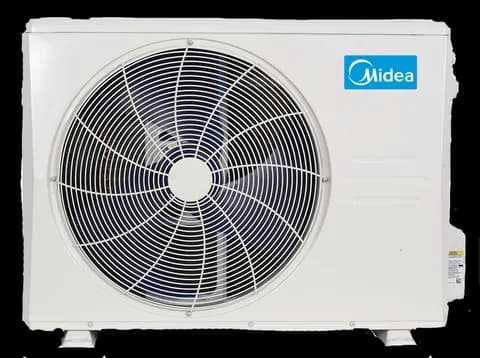
Midea Elevate Max 12k 230V
- Best for
- Common single-zone
- Cooling
- 12,000 BTU/h
- SEER2
- 28 SEER2
- HSPF2
- 12.7 HSPF2
- Voltage
- 230 V
- Install
- Professional install
- Score
- 9.3 / 10
Guide
Yes, Midea is good — genuinely good — but not in the way most shoppers expect. Midea is one of the largest HVAC manufacturers on the planet, and it quietly builds equipment for a long list of other brands you already recognize. Its own ductless line delivers class-leading certified efficiency, a current R-454B refrigerant platform, and a real cold-climate option, all at a value price. The catch isn't the hardware — it's the badge and the buying path. Branded "Midea" ductless leans contractor and distributor, so it's less of a click-and-buy product than a spec-it-and-source-it one. If you want the same engineering online today, its sibling line is the answer. Here's the honest breakdown.
Source-backed picks
These picks are selected from our published model database. Exact retail offers are shown when we have them.
SplitAtlas score 9.3 / 10
No current offer in our data
We do not have a current exact retail offer for this system in our data.
Get installation quotes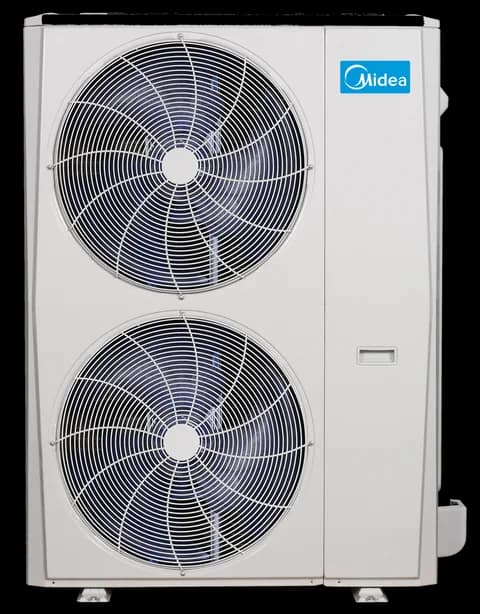
Midea / Advantage Series Multi-Zone High-Heat
SplitAtlas score 9.3 / 10
No current offer in our data
We do not have a current exact retail offer for this system in our data.
Get installation quotesRelated pages
Midea is not a boutique. It's one of the world's biggest appliance and HVAC makers, with the manufacturing scale that comes from producing compressors, coils, and complete systems at enormous volume. A big chunk of that volume ships under other companies' names — Midea is a major original-equipment manufacturer, which means some units you'd never associate with the brand roll off the same lines.
That matters for two reasons. First, the engineering behind a Midea mini split isn't a startup's first attempt; it's backed by one of the deepest supply chains in the industry. Second, it reframes the "off-brand" worry a lot of shoppers carry. Midea isn't a mystery importer — it's the company many premium and mid-tier brands lean on. When you compare Midea against the field on our best mini split brands guide, the story isn't "cheap unknown," it's "the manufacturer behind a lot of the market."
This is where Midea earns real respect. Its certified efficiency is class-leading — among the highest SEER2 numbers in the splitatlas catalog. If your priority is squeezing the lowest possible operating cost out of a ductless system, Midea belongs on the shortlist, and you'll see exactly where it lands against everything else in our most efficient mini splits roundup.
The current US ductless line runs on R-454B, the newer, lower-GWP refrigerant that's replacing R-410A across the industry. Buying into R-454B now means you're on the platform the industry is moving toward rather than the one it's phasing out — a genuine future-proofing point, not marketing.
The range is led by the Advantage Series Multi-Zone, offered in a standard tier and a High-Heat tier, in 2-to-5-zone configurations, alongside single-zone options. Multi-zone is where Midea's value proposition sharpens: strong efficiency across several rooms without the premium-badge markup. If you're heating and cooling a whole home from one outdoor unit, cross-shop it against our best multi-zone mini splits picks.
Plenty of value brands fall apart when the temperature drops. Midea's answer is the High-Heat tier, which carries a cold-climate designation — meaning it's built to keep producing meaningful heat well below the point where a standard heat pump starts fading. For anyone in a northern climate who wants Midea's efficiency without gambling on winter performance, that's the tier to spec.
It's a real distinction, not a label. If cold-weather heating is the whole reason you're shopping ductless, put the High-Heat tier up against the dedicated field in our best cold-climate mini splits guide before deciding — Midea competes there on merit, but it's worth seeing the full set.
No brand review is complete without the trade-offs, and Midea's are about access and perception more than quality.
The first is the buying path. Branded "Midea" ductless is oriented toward contractors and distributors — it's not always a tidy add-to-cart experience the way some DIY-friendly brands are. If you're a homeowner who wants to buy the hardware online today, the workaround is Midea's own sibling line: ACiQ, sold through AC Wholesalers. ACiQ is Midea-manufactured and near-identical under the skin, which means you can get essentially the same engineering with an online-buyable badge. That's not a knock — it's the practical route, and it's why we treat the two as close cousins throughout the catalog.
The second is perception. Midea reads as a value/OEM brand, not a premium nameplate. If you care about the status of the logo on your wall unit, or you want the marketing polish and dealer network of a legacy premium brand, Midea won't scratch that itch. But if you'd rather pay for engineering than for a badge, that "con" is actually the pitch. Shoppers optimizing on price will also want to see where Midea and its siblings land in our best budget mini splits guide.
Midea is a legitimately strong choice: a massive, credible manufacturer, class-leading certified efficiency, a current R-454B platform, and a real cold-climate High-Heat tier — all at value pricing. The honest asterisks are that branded-Midea buying is dealer- and distributor-oriented (reach for its online-buyable ACiQ sibling if you want to purchase today) and that it's a value/OEM badge rather than a premium one. For most efficiency- and value-minded buyers, none of that is disqualifying — it's the reason to look closer. See the full lineup, tiers, and where to buy on our Midea brand hub.