Mitsubishi Electric M-Series FX Deluxe Hyper-Heat 12k 230V
- Best for
- Common single-zone
- Cooling
- 12,000 BTU/h
- SEER2
- 29.9 SEER2
- HSPF2
- 12.4 HSPF2
- Voltage
- 208/230V
- Install
- Professional install
- Score
- 9.3 / 10
Guide
Short answer: yes, if you want the benchmark and you are hiring a professional. But Mitsubishi's naming is the hardest in the category, and picking the wrong line inside the right brand is the expensive mistake. We track 127 Mitsubishi systems across 28 lines, more than any other brand. They range from multi-zone systems rated to -24F to wall units rated to heat only down to +5F. The badge alone tells you almost nothing, so this review is mostly about reading it.
Source-backed picks
These picks are selected from our published model database. Exact retail offers are shown when we have them.
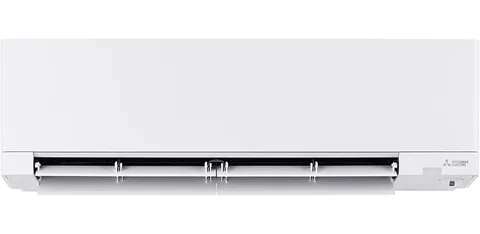
Mitsubishi Electric / M-Series FX Deluxe Hyper-Heat
SplitAtlas score 9.3 / 10
No current offer in our data
We do not have a current exact retail offer for this system in our data.
Get installation quotes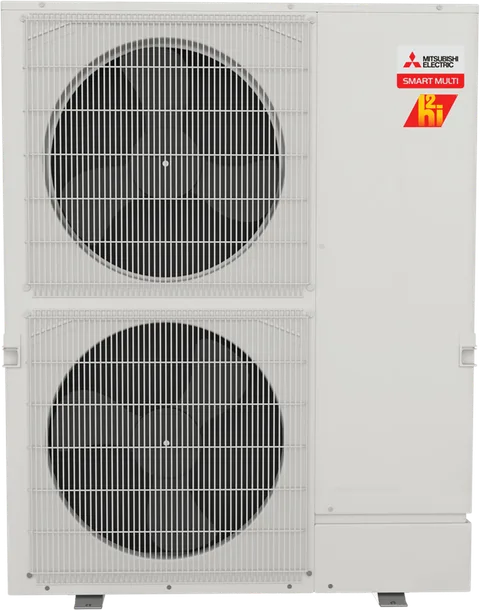
Mitsubishi Electric / MXZ SMART MULTI H2i
SplitAtlas score 9.3 / 10
No current offer in our data
We do not have a current exact retail offer for this system in our data.
Get installation quotesRelated pages
Mitsubishi is sold in the US through METUS (Mitsubishi Electric Trane HVAC US), and it's the reliability-and-documentation standard the category is measured against. Its submittals are thorough, its dealer network is the deepest in US ductless, and its cold-climate engineering is genuinely class-leading.
It is a premium, dealer-installed product. Professional installation by a licensed contractor is a warranty condition, so there is no DIY path. If that's what you want, start with best DIY mini splits.
Four things tell you what you're looking at.
M-Series is residential. P-Series is commercial, built for heavier duty cycles in light-commercial spaces.
H2i means Hyper-Heat. This is the single most important marker on the page. The same form factor is often sold in both a standard and an H2i version, and the difference is large. The SEZ Slim-Duct is rated to -4F, while the SEZ Slim-Duct H2i is rated to -13F: an identical cabinet with a different machine underneath. If you're heating with it, look for H2i.
On the wall units, the same marker is an HZ in the model number. The GS, GX and EX lines each include standard models and Hyper-Heat (HZ) models, and only the HZ models carry the cold ratings.
The two-letter codes are wall-mounted units: GS, GX, FS, FX, EX, HM, HX, JP, JX, WR and WX. There's no intuitive ordering to them, which is why the table below exists.
The three-letter codes are form factors:
This is where the line choice pays or costs you.
| Rated to | Lines |
|---|---|
| -24F | MXZ SMART MULTI and SMART MULTI H2i (multi-zone) |
| -22F | FX Deluxe Hyper-Heat · the Hyper-Heat (HZ) models of GX and EX Designer |
| -13F | FS · the Hyper-Heat (HZ) models of GS · the H2i versions of MFZ, PEAD, SEZ, SLZ, MLZ |
| -12F | MXZ-D Ported H2i (multi-zone) |
| -4F to -5F | standard GS, GX and EX models · HM · HX · JP · JX · the non-H2i form factors · P-Series · MXZ-D Ported |
| +5F | WR · WX |
Three things stand out:
For the wider field, see best cold-climate mini splits.
The FX Deluxe Hyper-Heat reaches SEER2 35, among the most efficient systems in our catalog, at 6,000 to 20,800 BTU, and it's rated to -22F at the same time. Efficiency and cold performance usually trade against each other, and this line refuses to.
FS reaches 32.2, and GS and GX both reach 28.4. Even the workaday Mitsubishi lines sit well above the market's middle.
At the other end, the ducted and cassette H2i variants run SEER2 14.8 to 17.5. That isn't a flaw. Ducted equipment does a physically harder job and is measured against a different bar, which is also why several of them carry ENERGY STAR certification at efficiency numbers that would fail for a wall unit. Our ENERGY STAR guide explains why.
Buy Mitsubishi if you want the most-supported equipment in US ductless, you're hiring a professional anyway, and you value a dealer network and documentation you can actually get hold of in ten years. In cold climates, buy an H2i or HZ model and the decision gets easy.
Look elsewhere if you're installing it yourself, or if you want long warranty coverage without hunting for a Diamond Contractor. Daikin publishes 12 years of parts coverage with registration.
Mitsubishi remains the safe answer, and the FX Deluxe Hyper-Heat at SEER2 35 and -22F is as good as ductless gets. Just buy the right line:
Treat the non-H2i form factors as mild-climate equipment.
All 127 systems are on the Mitsubishi brand hub, and the product finder will filter them by capacity, efficiency and cold-weather rating.
Is Mitsubishi a good mini split brand? Yes. It's the US benchmark for reliability, documentation and dealer support, and its FX Deluxe Hyper-Heat is among the most efficient systems we track.
What does H2i mean on a Mitsubishi? Hyper-Heat, the cold-climate version of a line. On ducted, cassette and console units it's the difference between -4F and -13F. On wall units, the Hyper-Heat models carry an HZ in the model number.
Which Mitsubishi is best for cold climates? MXZ SMART MULTI is rated to -24F for multi-zone. For single-zone, the FX Deluxe Hyper-Heat and the Hyper-Heat (HZ) models of GX and EX Designer reach -22F.
Which Mitsubishi is the most efficient? The FX Deluxe Hyper-Heat, at up to SEER2 35, one of the highest ratings in our catalog, while still rated to -22F.
Is Mitsubishi better than Daikin? On engineering and US dealer depth, Mitsubishi has the edge. On warranty, it depends on the installer. Mitsubishi's standard 5 years parts and 7 years compressor rises to 12 and 12 through a Diamond Contractor, while Daikin publishes 12 years of parts coverage with registration. Both are premium, and the local installer often decides it.
Can I install a Mitsubishi myself? No. Professional installation by a licensed contractor is a warranty condition.