ACiQ Extreme 18k 230V
- Best for
- Common single-zone
- Cooling
- 18,000 BTU/h
- SEER2
- 21.4 SEER2
- HSPF2
- 11 HSPF2
- Voltage
- 230 V
- Install
- Professional install
- Score
- 9.0 / 10
Guide
Yes - ACiQ is good equipment, because it is Midea hardware wearing a distributor's house brand. But the tier names hide something that matters more than the efficiency numbers: three of ACiQ's eight lines carry a 6-year compressor warranty, and the other five carry 12. Nothing in the naming tells you which is which. We track 40 ACiQ systems, and the brand rewards a buyer who reads the range carefully and quietly punishes one who buys on price alone. Here is the breakdown.
Source-backed picks
These picks are selected from our published model database. Exact retail offers are shown when we have them.
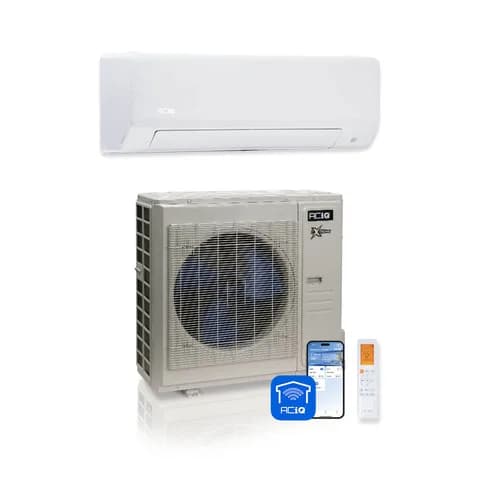
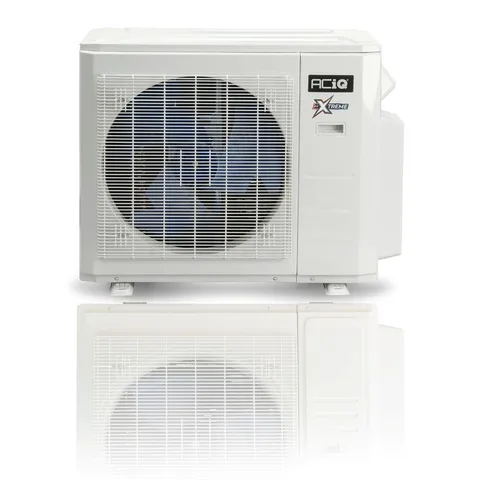
ACiQ / Multi-Zone Extreme Series
Related pages
ACiQ is the house brand of a national HVAC distributor, built on Midea hardware. That is a genuine positive rather than a hedge. Midea builds some of the strongest value equipment we track, and buying it under a house label is how you get that engineering without paying for a consumer-recognised badge.
It also has a practical benefit that shows up on the worst day of ownership. Because the platform is shared, an ACiQ fault code is usually a Midea fault code - the two brands publish an identical table of 36 fault codes plus 8 status displays. If your unit throws something cryptic, there is real documentation behind it, which is not something you can say about every value brand. Our ACiQ error-code library covers the shared EC, EH and PC families.
Every ACiQ system we track is professional-install. There is no DIY line here, no pre-charged quick-connect option. If you were hoping to install it yourself, that is the wrong shelf - start with our best DIY mini splits guide instead.
This is the single most useful thing to know before you shop ACiQ, and it is invisible in the marketing.
Double the compressor coverage, and the word that signals it is "Essentials," which most buyers read as the sensible mainstream choice rather than as a warranty tier. It is the opposite of a premium cue.
Both tiers are quoted with online registration, so the headline number is the registered number. Register the system when the installer leaves, not when something goes wrong.
The overlap is what makes this worth writing down. Compare the two lines that sit closest together in price and efficiency, at the size most people buy:
| 9,000 BTU model | SEER2 | Heats to | Compressor warranty |
|---|---|---|---|
| Essentials (230V, R-32) | 21 | -4F | 6 years |
| Standard Base (230V) | 21.2 | +5F | 12 years |
| Standard (230V) | 24.6 | -4F | 12 years |
| Extreme (230V) | 27.4 | -22F | 12 years |
Essentials and Standard Base land within a rounding error of each other on efficiency - 21 against 21.2 - and one of them covers the compressor for twice as long. The trade is cold weather: that Standard Base 9k is only rated to +5F, against -4F for the Essentials. So it is a real decision rather than a free upgrade, and which way it goes depends on your winter, not on the price tag.
Move up one more step and the argument gets easier. ACiQ Standard at 9,000 BTU is SEER2 24.6 with the 12-year compressor and the same -4F rating as the Essentials. If your budget stretches there, it is the better buy on every axis that matters.
The tier names are honest for once, and they run in a straight line.
Extreme is the line to want, and the only single-zone family that holds -22F. SEER2 runs 21 to 27.4 across 9,000-24,000 BTU, HSPF2 reaches 13.5, and it is ENERGY STAR certified. If you are heating with it through a real winter, this is the ACiQ that earns the comparison to name-brand cold-climate equipment. It sits on our best cold-climate mini splits shortlist for that reason.
Standard is the value sweet spot: SEER2 23.1-24.6, mostly rated to -13F, 9,000-24,000 BTU, 12-year compressor. For most homes in most climates this is the line to buy.
Standard Base is the odd one. Efficiency drops to SEER2 18-21.5, and the line is split in temperament - the 9,000 BTU models are rated to only +5F, while the 30,000 and 36,000 BTU models hold -13F. It keeps the 12-year compressor throughout, which is what makes it interesting against Essentials.
Essentials is SEER2 19-21 and -4F across 9,000-36,000 BTU, with the 6-year compressor. Most Essentials models are on R-32, as is every Essentials Economy and Multi-Zone Essentials model; Standard, Standard Base and Extreme are all R-454B. Not ENERGY STAR certified, which matters if you are counting on a rebate - check the rebates and tax credits guide before you assume.
Essentials Economy is the floor, and it is a real drop rather than a trim level: SEER2 17 flat across every capacity, rated to +5F, 6-year compressor. Worth knowing that it reaches 35,000 BTU, so the largest cheap ACiQ is also the least capable one. If you are heating with it, you are buying a unit that stops being rated at the temperature a cold snap starts.
ACiQ runs three multi-zone families, and one of them is a genuine catalog standout.
Multi-Zone Extreme (19,000-51,000 BTU, SEER2 22.2-25) is rated to -22F - the cold-climate answer. Multi-Zone Standard (18,000-60,000 BTU, SEER2 22-25.1) is rated to -13F and reaches 60,000 BTU, tied with Mitsubishi's 8-zone MXZ for the largest multi-zone condenser we track. Multi-Zone Essentials (17,700-24,000 BTU) covers the small end at -13F, with the 6-year compressor.
The trade is capacity against cold: -22F caps out at 51,000 BTU, and reaching 60,000 means accepting -13F. Both are strong efficiency numbers for multi-zone.
One caution that applies to every brand, not just this one: if you are only conditioning two rooms, price two single-zone systems first. Single-zone avoids the part-load penalty, and a failure only takes out one room instead of the whole house. Our single vs multi-zone guide works through the maths.
No consumer recognition. ACiQ is a distributor's house brand. If a familiar badge matters to you, or you think it will matter at resale, this is not that purchase.
No DIY path. Everything is professional install, so factor labour into the comparison. Our installation cost guide covers what that adds.
The naming misleads on warranty. Covered above, and it is the reason this review exists. "Essentials" reads like the default choice and buys you half the compressor coverage.
Essentials Economy is easy to land on by accident. It is the cheapest ACiQ at most capacities, and SEER2 17 with a +5F heating rating is a different product from the rest of the range.
Buy Extreme if you have real winters, Standard if you want the best balance of efficiency, warranty and price, and Standard Base over Essentials whenever the cold rating suits your climate, because the compressor coverage doubles for nearly identical efficiency. Skip Essentials Economy unless it is going somewhere that never gets cold and you have made peace with SEER2 17.
Underneath all of it is Midea hardware with documentation that actually exists, sold without the badge premium. That is a good deal for a buyer who reads the tier table - which, now, you have.
Full specs for all 40 systems are on the ACiQ brand hub, and the product finder will filter them by capacity, efficiency and cold-weather rating.