Cooper & Hunter Astoria Pro Series 12k 230V
- Best for
- Common single-zone
- Cooling
- 12,000 BTU/h
- SEER2
- 25.4 SEER2
- HSPF2
- 10.5 HSPF2
- Voltage
- 230 V
- Install
- Professional install
- Score
- 9.1 / 10
Guide
Short answer: yes, and it's better than its price suggests in one specific way: cold weather. Across the 111 Cooper & Hunter systems we track, nine of the eleven lines include models rated to -22F, and about half the systems carry that rating. It isn't a premium tier you upgrade into. It shows up in wall units, ceiling cassettes and ducted units alike. Efficiency reaches SEER2 27.4, and 94 of 111 systems are ENERGY STAR certified. If you had it filed as a mild-climate budget brand, the catalog says otherwise.
Source-backed picks
These picks are selected from our published model database. Exact retail offers are shown when we have them.
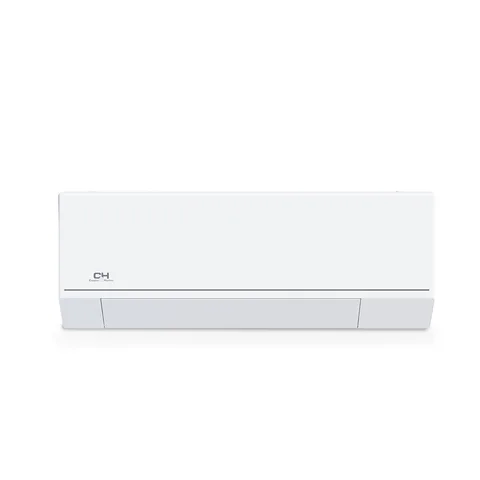
Cooper & Hunter / Astoria Pro Series
SplitAtlas score 9.1 / 10
No current offer in our data
We do not have a current exact retail offer for this system in our data.
Get installation quotes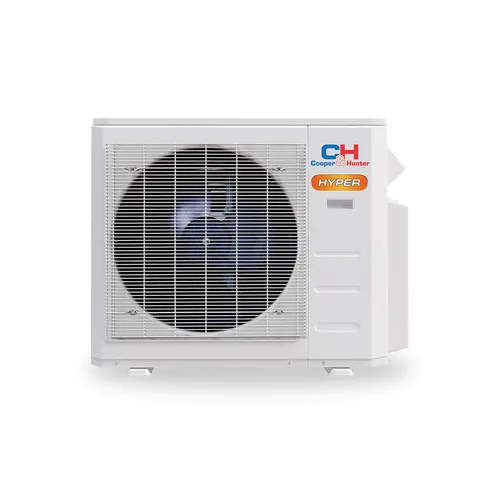
Cooper & Hunter / Hyper Heat Multi-Zone
SplitAtlas score 9.1 / 10
No current offer in our data
We do not have a current exact retail offer for this system in our data.
Get installation quotesRelated pages
Cooper & Hunter is a value-priced brand built on Gree hardware, and Gree is one of the largest air conditioning manufacturers in the world. It's widely available online and sold at prices well below the premium names.
Everything we track is professionally installed. There's no DIY line; see best DIY mini splits if that's what you need.
Nine of the eleven lines include models rated to -22F: Olivia, Olivia Midnight, Astoria, Astoria Pro, Slim Duct, Ceiling Cassette, Ceiling Cassette PRO, One-Way Cassette and Hyper Heat Multi-Zone.
Two lines have no -22F model:
What makes this unusual is the form factors. Deep-cold ratings on ceiling cassettes and ducted units are a short list in our catalog: Gree, Cooper & Hunter and Senville. If you want a cold-climate system that isn't a wall unit, Cooper & Hunter is on that list. See best cold-climate mini splits for the wider field.
This is worth flagging, because it's the question a buyer will have, and the answer isn't obvious.
Astoria and Astoria Pro publish identical performance in our data: the same SEER2 range of 19 to 27.4, and the same 6,000 to 36,000 BTU capacities. The same is true of Ceiling Cassette and Ceiling Cassette PRO: both run SEER2 16.7 to 22.6, and both cover 9,000 to 48,000 BTU.
So on the certified numbers, the Pro variants are not faster or more efficient. Whatever the upgrade is (build details, finish, features, or warranty handling through a different channel), it isn't showing up in the published performance data. Ask your installer what the difference is on the specific pair you're quoted, and don't assume you're buying capability. If the price gap is meaningful and nobody can name the difference, buy the standard version.
Buy Cooper & Hunter if you want cold-climate capability at a value price, especially in a ceiling cassette or ducted form factor, where -22F ratings are otherwise rare and expensive. For a cost-conscious professional install in a genuinely cold place, it punches well above its price.
Look elsewhere if:
The old summary of this brand (cheap, mild-climate, fine for the money) undersells what's actually in the range:
The genuine trade-offs are the standard-issue warranty and the thinner support, not the equipment's cold-weather ability.
Full specs for all 111 systems are on the Cooper & Hunter brand hub, and the product finder will filter by capacity, efficiency and cold-weather rating.
Is Cooper & Hunter a good brand? Yes, as a value brand with unusually broad cold-weather coverage. Nine of its eleven lines include models rated to -22F, and 94 of the 111 systems we track are ENERGY STAR certified.
Who makes Cooper & Hunter? It's built on Gree hardware; Gree is one of the world's largest air conditioning manufacturers.
Is Cooper & Hunter good for cold climates? Unusually so for the price. About half the range is rated to -22F, including some ceiling cassettes and ducted units, which is rare at any price. The rest stops at -13F, so check the exact model.
What is the difference between Astoria and Astoria Pro? On published performance, nothing. Both run SEER2 19 to 27.4 across the same capacities. Ask what the Pro upgrade actually is before you pay for it.
What warranty does Cooper & Hunter offer? 7 years compressor and 5 years parts, with registration. That's the industry standard, and shorter than Daikin or LG.