ACiQ Multi-Zone Extreme Series 27k 230V
- Best for
- Best for cold winters online
- Cooling
- 27,000 BTU/h
- SEER2
- 23 SEER2
- HSPF2
- 10.5 HSPF2
- Voltage
- 230 V
- Install
- Professional install
- Score
- 9.0 / 10
Guide
A 3-zone mini split runs three indoor heads off one outdoor condenser. It's the natural fit for a small whole-home system, or a three-bedroom setup where you want one outdoor unit instead of three.
Source-backed picks
These picks are ranked on fit and evidence. When an exact retail offer exists, we show it; when it does not, we route you to installation quotes instead.
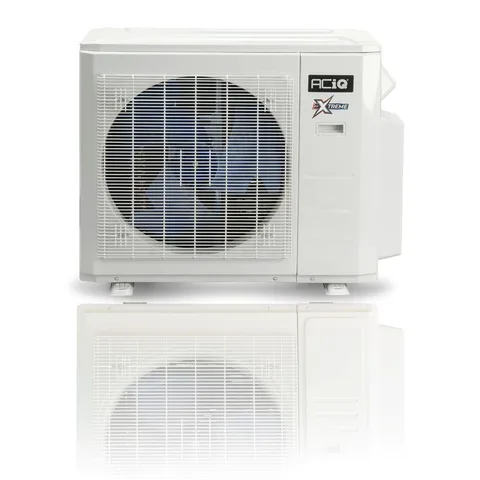
ACiQ / Multi-Zone Extreme Series
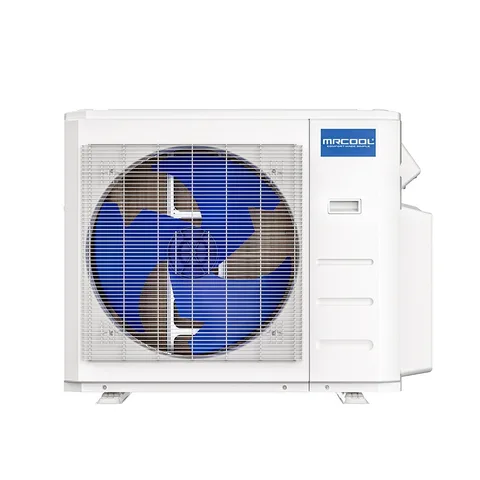
MRCOOL / DIY 5th Gen Multi-Zone
Certified per indoor-unit combination, not per outdoor unit
Paid link
Check price at HVACDirectReference-only price
Last seen at HVACDirect on Jul 20, 2026: $1,555. This is not a live price.
SplitAtlas score 9.3 / 10
No current offer in our data
We do not have a current exact retail offer for this system in our data.
Get installation quotesCertified per indoor-unit combination, not per outdoor unit
Related pages
Our picks by scenario:
Below the picks are the sizing rules that decide whether a 3-zone system actually works in your house. With three heads sharing one condenser, getting the capacity wrong is the most common and most expensive mistake.
| System | SEER2 | Rated heating down to | Output at 5F | Where to buy |
|---|---|---|---|---|
| ACiQ Multi-Zone Standard Series 27k 230V | 25 | -13F | 19,000 BTU | Sold online, pro install |
| ACiQ Multi-Zone Extreme Series 27k 230V | 23 | -22F | 27,000 BTU | Sold online, pro install |
| Klimaire DIY Series 27k 230V | 24 | -13F | 19,800 BTU | Sold online, DIY quick-connect |
| Bosch Climate 5000 Gen 4 19k 230V | 25 | -22F | 19,000 BTU | Dealer-installed |
| Mitsubishi Electric Ported Multi-Zone H2i 22k 230V | 20 | -12F | 25,000 BTU | Dealer-installed |
Three indoor heads, one outdoor unit, one refrigerant circuit. Each head sets its own temperature, but nearly all 3-zone systems heat or cool every zone at once: they won't run one bedroom on cool while another calls for heat.
The appeal is real: one condenser, one wall penetration set, one maintenance relationship, and a clean answer for a house or floor with three rooms and only one good spot for the outdoor unit. The catch is that all three heads draw from a single shared capacity, which is exactly where sizing goes wrong. More on that below; it matters more than which logo is on the box.
If you're still deciding between one multi-zone system and separate single-zone units for each room, read single-zone vs multi-zone first. For two rooms, separate units usually win on efficiency and resilience; a 3-zone system starts to earn its keep at three.
The ACiQ Multi-Zone Standard Series 27k 230V certifies SEER2 25. It is ENERGY STAR certified and heats down to -13F, with 19,000 BTU still available at 5F. It's sold through HVACDirect, which owns the ACiQ brand: order the condenser and heads there and book a licensed tech for the line sets, vacuum and startup. If you want less spend and can live with a little less efficiency, ACiQ's ACiQ Multi-Zone Essentials 24k 230V certifies SEER2 23 at -13F.
The ACiQ Multi-Zone Extreme Series 27k 230V is the one to price first for a real winter. It keeps running to -22F, and ACiQ rates it to deliver its full 27,000 BTU at 5F. It gives up two points of SEER2 against the Standard to get there.
The GREE Free Match 24k 230V is the name-brand alternative at the same -22F floor, at SEER2 21. Gree's warranty comes with conditions for online buyers, so check that the seller is Gree-authorized; our guide to whether buying online voids a warranty covers each brand.
Both brands attach conditions to online purchases: use a seller the brand authorizes, and a licensed installer.
Two 3-zone systems in our catalog are built for self-installation, and both use precharged quick-connect line sets, so there's no vacuum pump or gauges. EPA's Section 608 guidance does say that connecting pre-charged lines requires technician certification, so check that before you plan a self-install.
At three zones, still take the load calculation seriously. Consider paying a pro for just the sizing, even if you do the install, and budget for an electrician for the circuit.
When you want the strongest hardware and you're hiring a contractor anyway, these lead:
Fujitsu's current multi-zone lineup starts at 4 zones, so it isn't an option here. All of these are quoted rather than stocked, so ask for a quote rather than looking for a cart. In a cold climate, make sure the condenser you're quoted is the cold-climate version, not the base model.
This is where most 3-zone systems fail, so read it before you shop:
Whichever you pick, the decision that actually determines comfort isn't the brand. It's sizing each head to its room and not oversizing the shared condenser. Get that right, and any of these will run three rooms well for years.