ACiQ Multi-Zone Extreme Series 19k 230V
- Best for
- Best for cold winters
- Cooling
- 19,000 BTU/h
- SEER2
- 25 SEER2
- HSPF2
- 10.4 HSPF2
- Voltage
- 230 V
- Install
- Professional install
- Score
- 8.9 / 10
Guide
A 2-zone mini split runs two indoor heads off one outdoor condenser, and it's the right call when you have exactly two spaces to condition and one good outdoor spot: two bedrooms, a bedroom plus a living room, or an open main floor plus one back room.
Source-backed picks
These picks are ranked on fit and evidence. When an exact retail offer exists, we show it; when it does not, we route you to installation quotes instead.
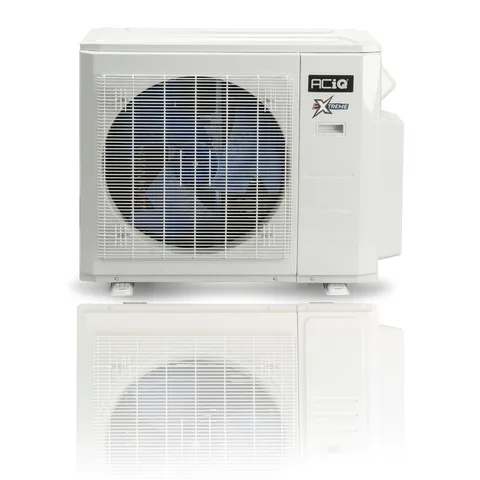
ACiQ / Multi-Zone Extreme Series
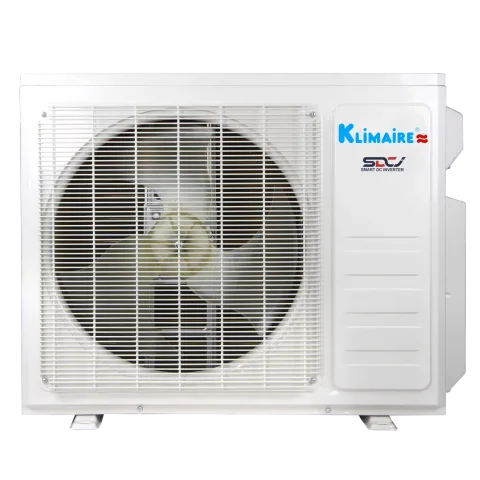
Klimaire / KMIP-KIWP DIY Series
SplitAtlas score 8.3 / 10
No current offer in our data
We do not have a current exact retail offer for this system in our data.
Get installation quotesRelated pages
The honest caveat first: for just two rooms, two separate single-zone units are often the smarter buy. They are usually more efficient, and one failure only takes out one room. A dual-zone earns its keep when you truly want one outdoor unit and one circuit. That tradeoff is worth reading before you spend: single-zone vs multi-zone.
| Pick | SEER2 | Coldest rated heating | Heat at 5F | How you get it |
|---|---|---|---|---|
| ACiQ Multi-Zone Standard Series 18k 230V | 25.1 | -13F | 13,500 BTU | Sold online, pro install |
| ACiQ Multi-Zone Extreme Series 19k 230V | 25 | -22F | 19,000 BTU | Sold online, pro install |
| Klimaire DIY Series 18k 230V | 24 | -13F | 16,000 BTU | Sold online, DIY quick-connect |
| GREE Free Match 18k 230V | 21 | -22F | 13,800 BTU | Authorized sellers, pro install |
| Mitsubishi Electric Ported Multi-Zone H2i 18k 230V | 19.3 | -12F | 22,000 BTU | Dealer-installed |
One condenser, one line-set circuit path, two indoor heads, each with its own thermostat and remote. The appeal is simplicity: a single outdoor unit to place and maintain, and (on most residential 2-zone systems) a single 208-240V circuit. That's genuinely valuable on a small lot, in a condo, or where an HOA won't let you hang two condensers on the wall.
The trap is capacity math. A 2-zone system's total output is shared, not doubled. A 24,000 BTU dual-zone condenser does not feed two full 24k rooms. It splits its capacity across the two heads, and most systems can't push their full nameplate to a single head either. Size the condenser to your combined load, then size each head to its own room. If both spaces are large, you may need a bigger condenser than the sticker suggests, or you may be better off with two single-zone units. Our how to size a multi-zone mini split guide walks the load math. If you're not sure two zones is even the right count, start with how many mini-split zones do I need.
The ACiQ Multi-Zone Standard Series 18k 230V certifies SEER2 25.1, a tenth ahead of Della's Vita 2-zone and ACiQ's own Extreme at 25. That puts it at the top of the 2-zone systems we track today. It is ENERGY STAR certified and rated to heat down to -13F, with 13,500 BTU still available at 5F and a COP of 2.3 there. ACiQ is HVACDirect's house brand. You buy the condenser and heads online, and a licensed tech does the line-set connections, vacuum and startup.
If winter is the job, the ACiQ Multi-Zone Extreme Series 19k 230V is the one to price first. It keeps running to -22F and still delivers 19,000 BTU at 5F from a 20,000 BTU rating at 47F, so almost none of its heat fades by the standard cold-rating point. It gives up nothing on efficiency either: SEER2 25 and HSPF2 10.4.
The GREE Free Match 18k 230V is the name-brand alternative at the same -22F floor, with less heat left at 5F (13,800 BTU). Gree attaches conditions to warranty coverage on online purchases, so buy from a seller Gree authorizes. Does buying online void a mini-split warranty? explains how each brand handles it.
Either way, match the published low-temperature rating to your winter design temperature, and keep backup heat for anything colder.
The Klimaire DIY Series 18k 230V (KMIP-KIWP) is the 2-zone in our catalog built for self-installation. It uses quick-connect line sets precharged for 49 ft, so there's no vacuum pump or gauges. EPA's Section 608 guidance says connecting pre-charged lines still requires technician certification. It certifies SEER2 24 and heats to -13F. It is not ENERGY STAR certified, though, which can cost you a utility rebate. MRCOOL's DIY multi-zone line starts at 3 zones, so it isn't an option for exactly two rooms. The electrical circuit is still an electrician's job.
All three brands put conditions on online purchases. Buy from an authorized seller and have a licensed contractor install it.
The Mitsubishi Electric Ported Multi-Zone H2i 18k 230V is rated to -12F and holds its full 22,000 BTU at 5F, per Mitsubishi. Its SEER2 of 19.3 is lower than the online picks above. What you pay for is the documentation, the dealer network and Mitsubishi's registered warranty. It is sold and installed through contractors, so get a quote. The Mitsubishi Electric Ported Multi-Zone 18k 230V is the mild-climate version, rated to -4F.
Della, Blueridge, Pioneer, Tosot, Cosmo, GE, Panasonic, Samsung and Friedrich also certify 2-zone systems, and some are rated to -22F. We don't have a retail listing to point you to for them yet, so price those through a contractor.
A 2-zone mini split is the right tool for exactly two spaces and one outdoor location, not a default for any small house.
Whatever you pick, match the condenser to what both rooms need together. If the two rooms are large or far apart, price two single-zone units before you commit to sharing one condenser.